| Other names: |
Pisum sativum |
| Appearance/taste: |
A small, edible round green bean which grows in a pod on a vine |
| Popular varieties: |
3 main types: garden, sugarsnap & mangetout |
| Interesting fact: |
voted the nation’s 7th favourite vegetable in 2005 |
| Nutritional value: |
high in carbohydrates; vitamin; protein; dietary fibre |
| When to grow: |
From seed early to mid-spring (+ 10 degree C) through to mid summer |
| Likes: |
Warm soil (using polythene)
when being planted and with seedlings protected by fleece;
as they climb they like being supported
by canes or stakes with netting; regular watering
to avoid dry soil; organic
mulch to hold moisture in ground |
| Dislikes: |
Hot weather or cold wet ground; pea moth (tiny caterpillars), slugs,
birds
and mice |
| Watch out for: |
Pests - protect all young plants with netting or fleece material;
mildew in dry conditions |
| Harvest time: |
Early to mid summer through to autumn |
| Cooking tips: |
Eat raw straight from the pod or cook as an accompaniment in hot
meals such as pies or casseroles or for use in soups |
| > |
There are two main types of peas. Shelling peas grow
inside the pods which are broken open to reach the peas. Mangetout
peas can be eaten pods and all. Depending on variety, peas grow from
75cm high to 1.5m tall. |
| > |
Peas like moist fertile soil. |
| > |
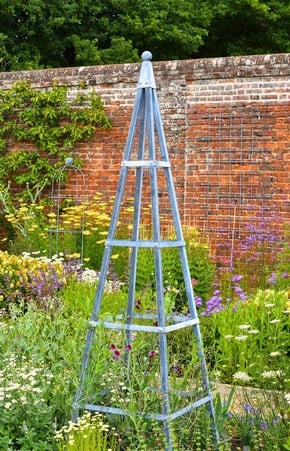
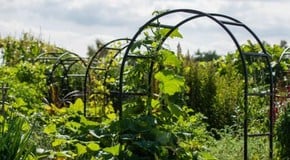
Tall growing peas will give the biggest harvests. They will need
some support. Use thin sticks or netting to give the plants something
to climb up. These should be put in place as soon as the plants develop
tendrils. |
| > |
Try growing peas with broad beans. Both can be harvested around
the same time. The broad beans will support
the peas as they grow. |
| > |
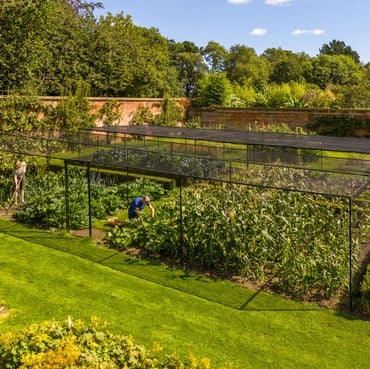
Birds especially pigeons like the young shoots and will eat them.
They bite the tops from the plants and stop them growing. Protect
the shoots with anti-bird
netting, scarecrows or bird scaring humming lines. |
| > |
Peas can be sown into the soil about 5cm deep, and 7cm apart. Cover
the rows with anti-bird
netting as birds will eat the seeds - as will mice! |
| > |
Peas can be started in a greenhouse. Use a rootrainer
and fill it with compost. When the seedlings are ready to go outside,
dig a trench the size of the piping and simply slide the young plants
out of the pipe and into the trench. This avoids having to disturb
the roots. |
| > |
Pick peas regularly. This will encourage more pods to form. Mangetout
peas should be picked as soon as the peas look like tiny swellings
in the pods. |
| > |
When the crop has finished, cut off the stems. Leave the roots
as they will release nitrogen into the soil. |