

| Other names: |
Allium cepa |
| Popular varieties: |
Centurion (light skin), Hyred (red skin), Setton AGM (dark skin) |
| Interesting fact: |
Used by Roman gladiators to rub into their bodies to harden muscles |
| Nutritional value: |
Full of vitamins A & C and minerals |
| When to grow: |
Mid spring or autumn |
| Grown from: |
Seed in pots
and planted out when strong enough or baby onions that are planted
directly into the ground |
| Likes: |
Sunny & sheltered site; dry conditions; good drainage; free
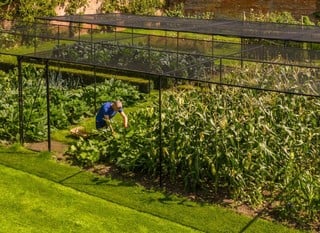
of weeds when growing and covered with fine
net and fleece
to avoid pests |
| Dislikes: |
Freshly manured ground; growing on same ground every year (risk
of pests/diseases); birds;
frost and weeds |
| Harvest time: |
Mid-to late summer when leaves are yellow and tops are bending
over |
| Watch out for: |
Diseased bulbs (fluffy white growths) when harvesting |
| Cooking tips: |
For seasoning sauces, soups, curries, stews and salads |
| > |
There are two main types of onions - spring onions and large
globe onions.
|
| > |
Yellow skinned globe onions grow bigger than red skinned varieties.
Salad onions are milder tasting. |
| > |
You can grow onions from seed
or from sets (small baby bulbs). Sets are more expensive, but quicker
to grow. |
| > |
Seeds should be sown in greenhouses from January. When large enough
to handle, separate them into rows in
trays or in pots. Seed sown onions can be planted
out in the garden in early spring. |
| > |
Before planting them out, make sure they have got used to the outside
temperatures. Leave the pots outside for longer and longer times until
they can be left outside all day and night. Then they will be ready
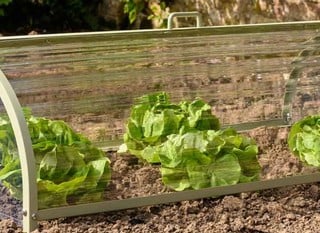
for planting in the vegetable patch. Using a coldframe
or plant house helps this hardening off process too. |
| > |
Sets can be planted 10cm (4”) apart straight into the soil
in early spring. Plant each set so that the top just shows above the
soil. Break off any flower heads which appear. |
| > |
When the bulbs have swollen in late summer, pull back the earth
from the bulbs. Let them lie on the earth exposed to the sun for a
few days. |
| > |
Spring onions can be sown from seed straight into the earth every
three weeks from spring to midsummer. Plant a small amount of seed
each time. This will avoid having too many onions ready for harvesting
and being unable to eat them all. |
| > |
Onion Fly is the main pest. The flies lay their eggs in the bulbs.
When the eggs hatch, the maggots eat the bulbs. Try growing onions
next to carrots or parsley to mask the smell. This can confuse the
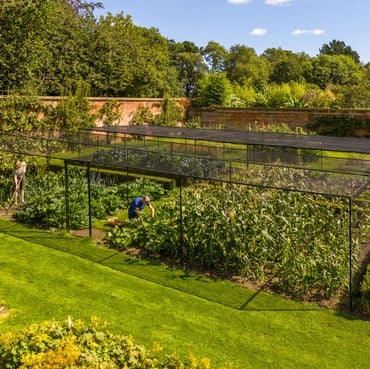
onion flies. Insect-mesh
protection netting with its fine mesh size will also help to keep
Onion Fly at bay. |