

| Other names: |
Lactuca sativa |
| Appearance/taste: |
Hearting – wavy outer leaves with a crisp dense centre of
leaves with excellent flavour; loose leaf – highly decorative
curled or frilly-leaved leaf shapes with some beautiful red varieties
that have a slightly bitter taste |
| Popular varieties: |
Hearting (types include Butterhead, Iceberg & Cos) or loose
leaf (types include Lollo); both varieties have a range of colour
and tastes |
| Interesting fact: |
Romans and Ancient Egyptians first used lettuce as a way to help
them sleep at the end of meal times |
| Nutritional value: |
A very good source of dietary fibre, vitamin A, vitamin C, vitamin
K, calcium, magnesium, iron and potassium |
| When to grow: |
Seed
outdoors between mid spring to late summer or late summer to early
autumn; avoid mornings where weather can be too hot |
| Likes: |
Full sun in moisture retentive and fertile soil; protecting from
cold with cloches
or fleece;
plenty of watering;
fertiliser
feed if growing is slow |
| Dislikes: |
Cold – particularly with early or late sowing of seed; pests
– slugs, snails, chafer grubs and aphids |
| Harvest time: |
Summer time if grown from mid spring to late summer; autumn time
if grown from late summer to early autumn |
| Watch out for: |
Pests – control biologically
with treatment that can be watered onto the growing area; grey-mould
– in cold and damp summers where any affected material should
be removed and space between plants increased; “bolting”
or premature growth which leads to bitter tasting leaves and occurs
in hot dry weather so ensure regular watering. |
| Cooking tips: |
Cold and raw in a salad with a vinegarette dressing for extra taste;
part of a relish for barbecue food. |
| > |
Try different types of lettuce in your patch: Cut
& Come Again - just cut some leaves and they will grow
again. You can do this four or five times before the plant has to
be replaced.
Crisphead - grows tight heads with leaves which
have to be peeled away
Cos - long crunchy upright leaves
Butterhead - loose leaves with a small head in
the centre
Loose Leaf - frilly leaves usually red in colour
|
| > |
Ferny, frilly types of lettuce look good grown among flowers in
the flower bed or lining paths |
| > |
Lettuce needs fertile, moist soil. It will grow in
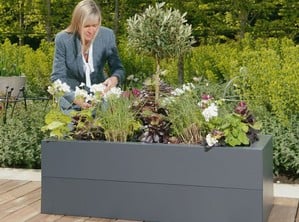
soil which is in shade for some of the day. Lettuce can be grown in containers or window boxes . Just make
sure the soil is kept moist. |
| > |
Sow a little seed every two weeks. This will allow you to harvest
lettuce regularly throughout the summer. Sow too much too often and
you will find you have too much lettuce to eat and the leaves are
wasted. Plants should be removed to the compost when a flower head
appears. |
| > |
Seed does not need to be sown deeply. Just 1cm (0.5") deep
and covered lightly with soil. |
| > |
Water
in the morning rather than the evening so that the leaves dry off
making them less likely to be affected by disease. |
| > |
Slugs are the main problem. Use Nemaslug
biological pest control or slug barriers such as slug
copper rings, eco-friendly
recycled boards or slug
& snail copper tape to protect the crop. Nemaslug contains
nematodes that are tiny microbes which have to be watered into the
soil and attack the young slugs as they grow. |
| > |
Lettuce can be grown all year. In the late autumn and winter,
grow lettuce in a greenhouse or cold
frame to protect it from frost. Frost will kill the plants.
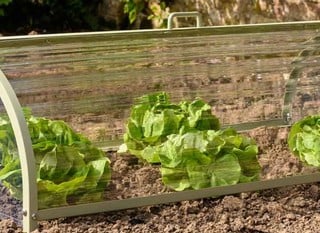
Use a cloche(s)
when growing in the ground to protect the crop.
|