
| Other names: |
Brassica Oleracea |
| Appearance: |
Different sizes, puckered shaped leaves (pointed, open and flat)
and colours (green and purple). |
| Popular varieties: |
Late Flat Dutch; Early Jersey Wakefield; Danish Ballhead |
| Interesting fact: |
Declared by ancient Greeks and Romans as “the first of all
vegetables” and praised for its medicinal properties |
| Nutritional value: |
Full of anti-oxidants (Vitamin E) and Vitamin C |
| When to grow: |
Any time of year – for summer crop sow in late winter-late
spring. |
| Grown from: |
Seed
that is sown with different times for different harvest times. |
| Likes: |
Sunny site with firm soil; watering;
being covered in fleece
or insect-proof
netting; protection from wind and frost by piling up soil around the
plant. |
| Dislikes: |
Cabbage root fly, cabbage white butterfly |
| Harvest time: |
In all 4 seasons but for seeds sown in late winter-late spring
these will be ready in the summer time. |
| Watch out for: |
Split heads – not enough watering, frost or over maturity;
dead leaves that start to rot. |
| Cooking tips: |
Mixed with other vegetables for coleslaw; soups; boiled or steamed
for inclusion in a Sunday dinner |
| > |
Cabbages can be hard work, but are worth the effort.
They take a long time to grow. Winter and Savoy cabbages are the
most well known. These have heads like balls and may be green or
white. They are planted out midsummer and harvested from late autumn
to the end of winter. |
| > |
Dutch white cabbages have tight heads. They do well in small plots
as they take up less space. Both red cabbages and Dutch white cabbages
have to be planted out in early summer and are harvested in early
winter. |
| > |
Chinese cabbage grow tall, like cylinders and have long upright
leaves. Sometimes they are described as Chinese leaves. Sow in spring
or at midsummer and harvest during the autumn. |
| > |
Cabbages like rich fertile soil. They will not do well in shade. |
| > |
Seeds should be sown in shallow rows in the vegetable plot. Move
the seedlings to their permanent place when they have 5 or 6 leaves.
Alternatively, cabbage can be raised in pots before being planted
outside. |
| > |
Plants should be dug in the ground 60cm apart, slightly deeper than
they were originally planted. Water in well. When the water has drained
away, firm the soil around the plants with your feet. Cabbages like
firm soil around their roots. |
| > |
Feed
well while growing. |
| > |
Do not grow cabbage on the same place two years running. This will
decrease the chance of clubroot disease developing. Add some lime
to the soil too when planting as this can help prevent clubroot too. |
| > |
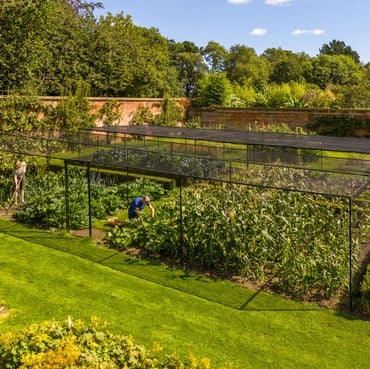
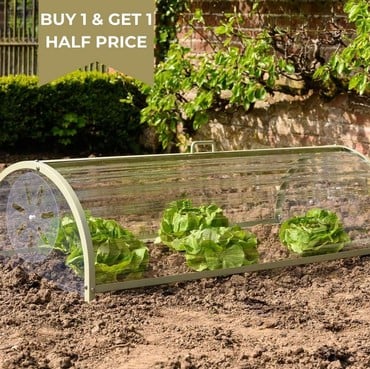
Watch out for cabbage white butterfly and the cabbage root fly.
It is better to prevent these rather than reacting after the event
because they will eat the plants. We recommend using insect
mesh netting which is a very long lasting fine mesh covering that
effectively keeps out these pests and also birds too. Other useful
protection methods include cabbage
collars, slug
traps and Nemaslug
biological pest control. |
| > |
Protect cabbages in winter from attacks by pigeons by covering the
plants with anti-pigeon
netting. |