
| Other names: |
Brasscia oleracea |
| Appearance/taste: |
Like a little cabbage and grows in stems; nutty/peppery taste.
|
| Popular varieties: |
Revenge AGM, Maximum AGM, Red Delicious & Cumulus |
| Interesting fact: |
Record for speed eating sprouts is 44 a minute! |
| Nutritional value: |
Vitamins A & C; vitamin B - folic acid; dietary fibre |
| When to grow: |
Mid-spring to early-summer |
| Grown from: |
Seed
|
| Likes: |
Sunny site; firm, alkaline and deep soil; regular weeding and
watering;
nitrogen-rich fertiliser;
mesh
netting to fend off pests |
| Dislikes: |
Wind damaged roots; cabbage whitefly and aphids |
| Watch out for: |
Fungal diseases |
| Harvest time: |
Early-autumn when sprouts are firm and size of a walnut |
| Cooking tips: |
Steam or boil; Sunday lunch favourite particularly at Christmas
as it’s a winter vegetable; stir-fry or make into a soup |
|
>
|
Brussel Sprouts do best in well drained, firm, fertile
soil. The soil should not have had any manure added to it. It should
not be acidic. |
|
>
|
Plant in a sunny spot with some shelter from the wind. They grow
tall and can be damaged by wind. The sprouts develop along the stem,
with lots of leaves at the top.
|
|
> |
Sow seed
outside in rows about 1cm (0.5”) deep. When the seedlings develop
their first true leaves, move them to their permanent home. |
|
>
|
Keep as much soil as possible around the roots when they are being
moved. Plant the seedlings 60cm (24”) apart. If you want baby
sprouts, place the seedlings closer together.
|
|
>
|
Water well. Feed with a leaf fertiliser during the summer. |
|
>
|
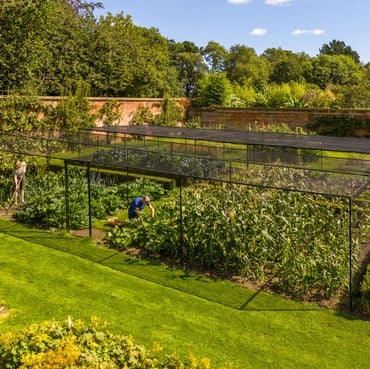
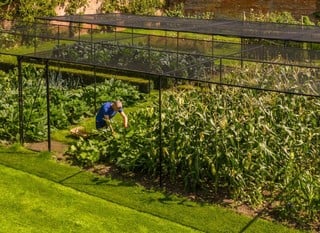
Watch out for caterpillars and insects attacking the growing plants
during the summer. They can cause a lot of damage.
Remove any caterpillars you see but the best way is to be preventative
with
insect-mesh a fine long lasting mesh that also keeps out birds
too. |
|
> |
You can grow companion plants like nasturtiums and marigolds nearby
to distract the insects.
|
|
>
|
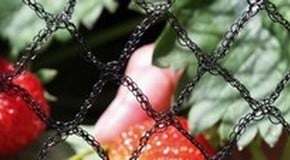
Protect the plants from birds especially pigeons. They will eat
the leaves and the tops of the plants. If this is a problem, the only
effective answer is to cover with
anti-pigeon
netting.
|
|
>
|
Sprouts can be picked from early autumn until mid-winter. Pick
from the bottom of the plant and move upwards. Snap the sprouts off
with a sharp downward tug or cut with a sharp knife. |
|
>
|
When all the sprouts on a stem have been picked, cut the stem top
off. These leaves can be cooked and eaten like cabbage.
|
|
>
|
Do not plant Brussel Sprouts on the same piece of ground two years
running as diseases can build up in the soil. |