


| Other names: |
Beta vulgaris |
| Appearance/taste: |
Earthy flavoured blood red root with edible pretty green, purple-veined
leaves. |
| Popular varieties: |
Pablo and Boltardy |
| Interesting fact: |
Leaves from the root that we eat were valued by the Romans at
first for their medicinal qualities that treated both fevers and skin
problems. |
| Nutritional value: |
Roots are a source of vitamin C and leaves contain vitamin A;
carbohydrates; dietary fibre & protein |
| When to grow: |
Early spring to summer |
| Grown from: |
Seed
either in trays
at first or straight in the ground when it is warmer (+8 degrees C)
|
| Likes: |
An open, sunny site; well-drained and fertile soil that has been
improved with rotted organic matter; light soil that warms up quicker;
watering
in dry spells; regular weeding around the root. |
| Dislikes: |
Lack of water or over-watering |
| Watch out for: |
Too much water will cause splitting the root and not enough watering
produces woody roots; harvest too late and the texture becomes woody.
|
| Harvest time: |
8-10 weeks from planting in early or mid autumn when roots are
a tennis ball size |
| Cooking tips: |
Eaten raw, baked or steamed; serve in salads, soups and stew |
|
>
|
Beetroot looks very pretty in a sunny spot because of their shiny green leaves that have brilliant red veins and stalks which radiate well in sunlight too.
|
|
>
|
Everyone thinks of beetroot as being red. Other colours are available
- yellow and white. Chiogga is a popular variety which has dark flesh
with white rings.
|
|
>
|
Roots can be round or long and straight. Most beetroot is round
or globe shaped. Other shapes are possible. You can get varieties
of beetroot which grow like ovals or cylinders. There are also long
rooted varieties but these need a sandy, well drained soil in order
to succeed.
|
|
>
|
Beetroot likes moist, fertile soil to which manure has not been added.
|
|
>
|
The 'seeds' are like a fruit and contain several seeds. Seeds
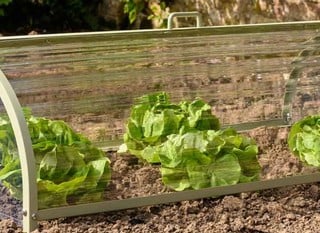
will take about 10 to 14 days to germinate. For a very early crop
sow some seeds under cloches
in March. The beetroot will be ready for harvesting by May. |
|
>
|
Sow beetroot in small amounts at regular intervals. This will avoid
having a harvest glut. Seeds can be sown straight into the ground
about 1.5cm (0.5”) deep.
|
|
>
|
Seed can be grown in pots so that young plants are ready to plant
out when other crops are dug up to create space. Keep about 15cm (6”)
between each plant.
|
|
>
|
Bolt resistant varieties like Boltardy are best as these will not
quickly run to seed. For the best taste, use the roots while they
are small. When the roots get big and woody, they are not very nice.
Twist off the leaves rather than cut them. This decreases the amount
of 'bleeding' from the roots.
|