
Seed
collection for a variety of vegetable growing options.
Dibber
for greater control when sowing.
Paper
potter to make biodegradable pots from old recycled newspaper.
Seed
labels and waterproof pen.
Hand
forks, trowels and hoe
Gardeners
Reel and Line is great to ensure sowing in a straight line
and to maintain the correct distance between plantings.
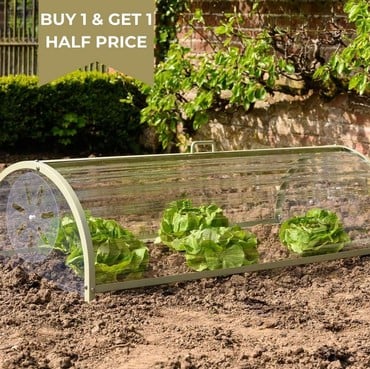
Cloches
to keep individual plants warm and to protect against adverse weather
as well as pests.
Polytunnel
or fleece
provide the same purpose as the cloche but covers a wider surface area
to protect a larger quantity of seeds and plants. Used before planting
out to warm up the soil too.
Watering
can with a fine rose.
Choose a day which is not too windy otherwise the
seeds may blow away. Make sure that the seeds are being planted when
the ground is warm enough otherwise they will not germinate. Look
at the planting instructions on the packet for guidance.
• Hoe any weeds and dig up any perennial weeds like
dandelions, nettles or thistles.
• Rake over the surface of the bed to create a nice fine surface
without any clods or large stones.
• The size of the trench that needs to be dug will depend on what
you are going to plant. Tubers like potatoes need to be planted
deeper than carrot seeds. Look on the vegetable pack to find out planting
depths.
• To create a nice straight line making it easier to weed later
on, put a stick in the ground. Tie a piece of string to the stick,
pull it taut and tie the other end to another stick in the ground.
Create a trench along the planting line.
• To sow small seed such as carrots or lettuce, pour a little
into a piece of paper. Pull up the sides of the paper to make
a fold with the seed in the middle. Gently tap the edge of the paper
as you move it along the row. This will allow the seed to fall
out evenly.
• Large seeds can be placed along the row using fingers. Do
not squeeze or break the seed. Space the seeds evenly. Alternatively
use a dibber to create individual holes.
• Cover the seeds with a thin layer of compost. Water lightly.
• Using a waterproof pen or pencil write the name of the seed on
a label. Put the label at the head of the row.
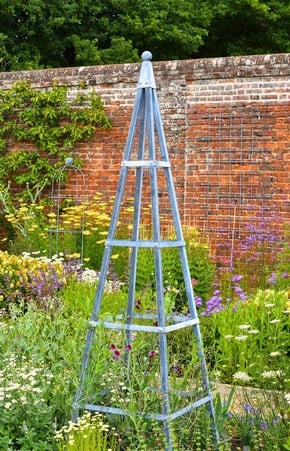
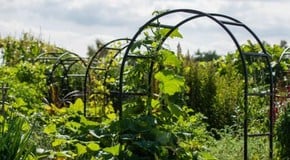
Runner beans and French beans should not be planted outside until
mid May at the earliest. They should be planted around already erected
supports. Three seeds should be planted around each cane or each
side of an obelisk. As they grow gently tie in the first stems to
the supports to train them in the direction you want them to grow.
After that they will grow up and hold on to the supports themselves.
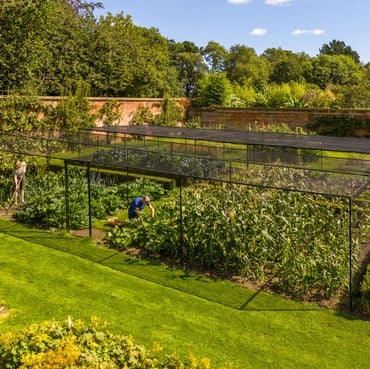
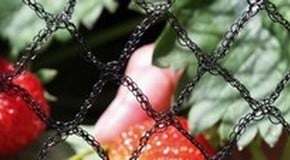
Put netting over the area where pea or bean seeds have been sowed.
This will prevent mice digging up and eating the seeds. Remove
the netting once the plants have grown a few centimetres high.
• Check the seeds daily to see if the soil is drying
out and needs more water.
• If frost is forecast cover young seedlings with fleece or a cloche
to give them some protection.
• A cloche or fleece can be used when planting. They will warm
up the soil to enable small batches of earlier crops to be grown.