

When choosing crops to grow on a windowsill consider the size of the
window. You do not want to block all natural light into the classroom.
For small windows opt for low growing plants which
can be either harvested regularly or have only a short growing season.
Ideal for this purpose are lettuce, radish, turnips, beetroot, cress,
mizuna and rocket. Use a mini
bottle top sprinkler fitted onto a recycled water bottle to gently
water the seeds in.
A larger windowsill or floor length window can be
used to grow bush tomatoes or even runner beans as well as salad crops.
Take care with runner beans to make sure that the canes are safely secured.
Cane tops should be covered with toppers; or even chunks of blutack
to prevent children falling on them and injuring their eyes. Use soft
or flexible
ties to secure the stalks against the canes. Stalks need to be secured
firmly but leave room for growth. It is easy to damage stalks accidentally
by using ties which cut into the stalks.
Windowsills can also be used to house propagators
to raise crops before they go outside. Seeds can be germinated very
successfully on windowsills. The seed trays will need to be covered
with cling film or a transparent plastic lid to keep the warmth and
moisture in the soil.
Before putting any plants outside permanently, remember to harden off
by putting them outside during the day and bringing them inside at night.
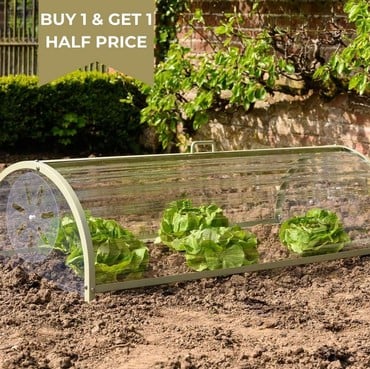
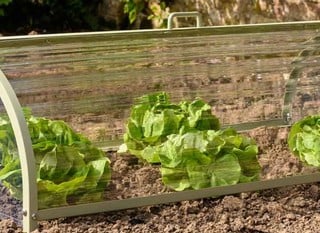
This is needed for about a week. Alternatively use a
cold frame that acts just like a mini-greenhouse.
Aphids, Red Spider Mite and Mealy Bugs are all pests that are a danger
to indoor planting. Control these pests by using biological
pest control, a natural way of adding predators to the soil that
will attack the unwanted visitors.
Careful attention needs to be paid to watering windowsill plants. They
can very quickly dry out especially in warm classrooms or when the sun
is shining strongly through the windows. Be careful of scorching the
plants. If the window is in direct sunlight, just stick a piece of plain
white paper onto the glass during the middle of the day that acts as
shade.
Mix
water retaining gel into the compost before planting. Water well
and the gel will expand and act as a self contained water reservoir.
Plants are kept moist as the gel slowly releases its water supply. This
will prove very useful over weekends when classrooms are unused and
plants may be left uncared for. A watering
can, ideally with a long nozzle and fine rose, is essential.