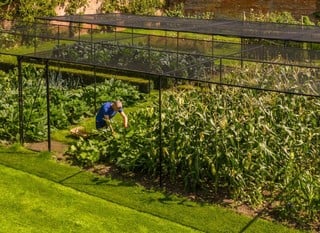

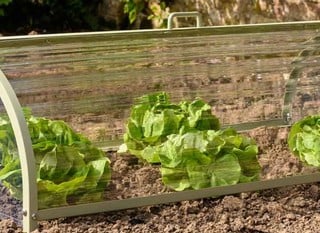

There are often so many questions to ask when thinking about a school gardening project. Here we have answered some of the main questions but if you don’t find all that you need below, then simply email Martin, the Head Gardener of the Harrod Horticultural Kitchen Garden Project at buddinggardeners@harrod.uk.com – he’s on hand to help!
How big and where should our garden
be?
Your garden could be anything from a window box to a sizable plot. Size
really doesn’t matter because education is your main purpose.
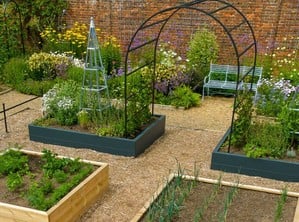
A few plants is enough for experimental observations, a plot of 4m x
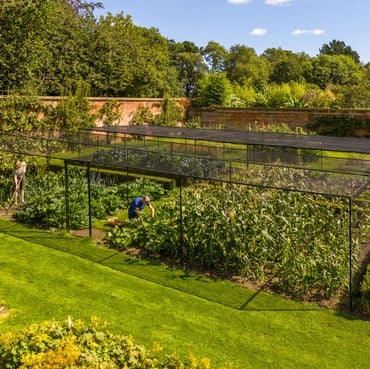
4m will give you a good harvest whilst anything bigger can be deemed
a kitchen garden like our very own. Our best advice is to begin small
because you can always expand later.
Limited or No Green Space At All?
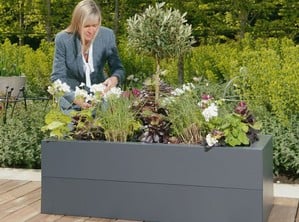
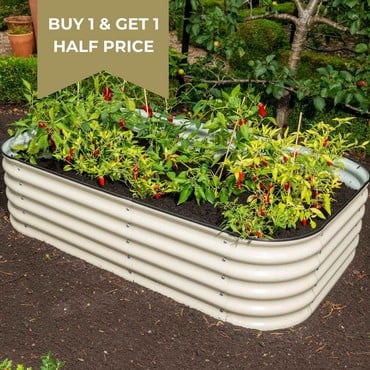
Remember that it is possible to grow nearly anywhere if growing in a
raised
bed so this is a major advantage if your school grounds suffer from
poor soil or if perhaps you don’t even have any green space at
all! These are available from as small as 1m x 1m dimensions and you
can expand to create your own design. Just fill up with garden centre
compost to create your own plot!
What should we grow?
Remember to involve the children in this part of the decision making
to give them a sense of project ownership. Follow our activity
guide for ways to do this.
Once the group has decided on the vegetables to grow, use our hints and tips for growing vegetables and vegetable fact sheets to help you assess the practicalities. Think about timings. When do you hope to start the project and does this fit with the recommended growing time-frame for the chosen vegetables? Consider the situation of the garden plot, what weather conditions is it exposed to? Are these favoured by the chosen vegetables? What is the soil condition like? Again, will this suit the vegetables to be grown?
Who will do the work?
Give children the opportunities to take responsibility, make decisions,
plan, organise work, collaborate, evaluate and publicise. Use class
time to prepare these responsibilities. Adult volunteers can help do
the heavier work. Parents, community members, caretaker and fellow teachers
whose faculties (Science, Mathematics, Technology, etc.) could benefit
from the project can be encouraged to get involved.
How much time will it take?
It is a good idea to use lessons for discussing and explaining, planning
and organising work, setting up experiments and observations, and documenting
garden activities and events (see our activity
sheets ). A class needs about an hour of garden time and an hour
of lesson time per week with a little “garden homework”
in their own time.
What can we achieve with limited funds?
Keep it simple by doing something small such as windowsill growing or
growing in containers. You’ll still get the benefits of experimentation
with gardening and signing up for FREE for
special school discounts with Harrod Horticultural will certainly
help.
What if I only have limited gardening
knowledge?
This needn’t be a barrier at all. This website has the basic step-by-step
growing guidelines to help you through
the various stages of planting, tending to plants and harvesting. Hints
and tips on growing popular vegetables are
also covered detailing when to grow, how to grow and what to look out
for whilst we have fact sheets that will
enlighten both teachers and pupils alike. There’s even a jargon
buster page to make sure you are not lost among the gardening
language! Remember, you are not alone, we have on-line support for you
with our own Head Gardener, Martin, at buddinggardeners@harrod.uk.com
who is at hand to cover any particular questions you may have that are
not covered on this website.